
Danger Season Is Here Again, with Triple the Danger for 2026
The Equation Read More [[{“value”:”
For the past five years, the Union of Concerned Scientists has been tracking the climate extremes of what we call “Danger Season”—the period between May and October when North America is hit hardest by extreme weather, like heat, drought, wildfire and hurricanes. Because of fossil-fueled climate change, each year brings new degrees of danger, but 2026 is uniquely perilous. This is the year when the triple crises of climate change, a reckless authoritarian government, and economic insecurity will start to collide.
Stay informed, stay safe, stay mad, and demand better.
Climate change news has been so seismic lately that it should be breaking through the news cycle. Except that the steady explosions of new emergencies, largely caused by the Trump administration, quickly gobble both the headlines and our beleaguered attention. But let’s be clear: we are no longer on the edge of the climate crisis. We are fully inside it.
2023, 2024, and 2025 were the three hottest years on record, and during those years, we surpassed the critical 1.5°C threshold, at least temporarily. So far in 2026 scientists are grappling to understand the accelerating rise in global average temperatures, and to make sense of the developing El Niño—the speed and timing of its arrival, the intensity it could reach, the impact that could unleash, and the lasting effects. Against this climate change backdrop, the northern hemisphere is warming as it does each summer and Danger Season is kicking in, with the outlook for climate extremes, spring through fall, coming into focus:
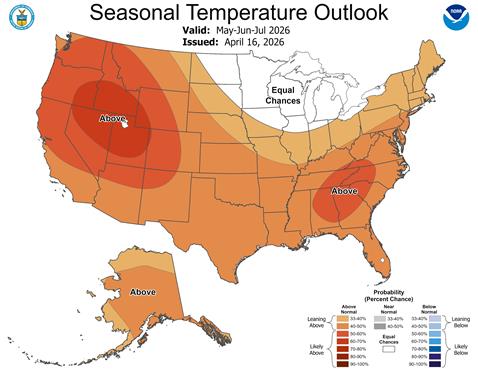
- Extreme heat: Above-average temperatures are forecast for much of the contiguous United States throughout spring, summer, and fall. Extreme heat is the deadliest of all weather-related hazards, responsible (despite underreporting) for more deaths each year in the US than hurricanes, floods, and tornadoes combined. Reliable, affordable air conditioning—now a lifesaving necessity across the Sun Belt—will be essential to public health and safety, particularly for the elderly, small children, pregnant women and other vulnerable groups.
- Drought: An historic drought is unfolding in the US, where about 61 percent of the continental US is in some stage of drought, with about 44 percent in “severe drought” or worse. Most of the Southeast is in extreme to exceptional drought. Much of the West, with large areas already in the grips of the worst drought in over a millennia, is facing a bleak water supply outlook following low winter snowpack and unprecedented early heat. And in the Plains states, where drought conditions are more typical of summer, thirsty crops are already suffering. These conditions are expected to increase wildfire risk, strain water supplies, and drive up food and energy costs.
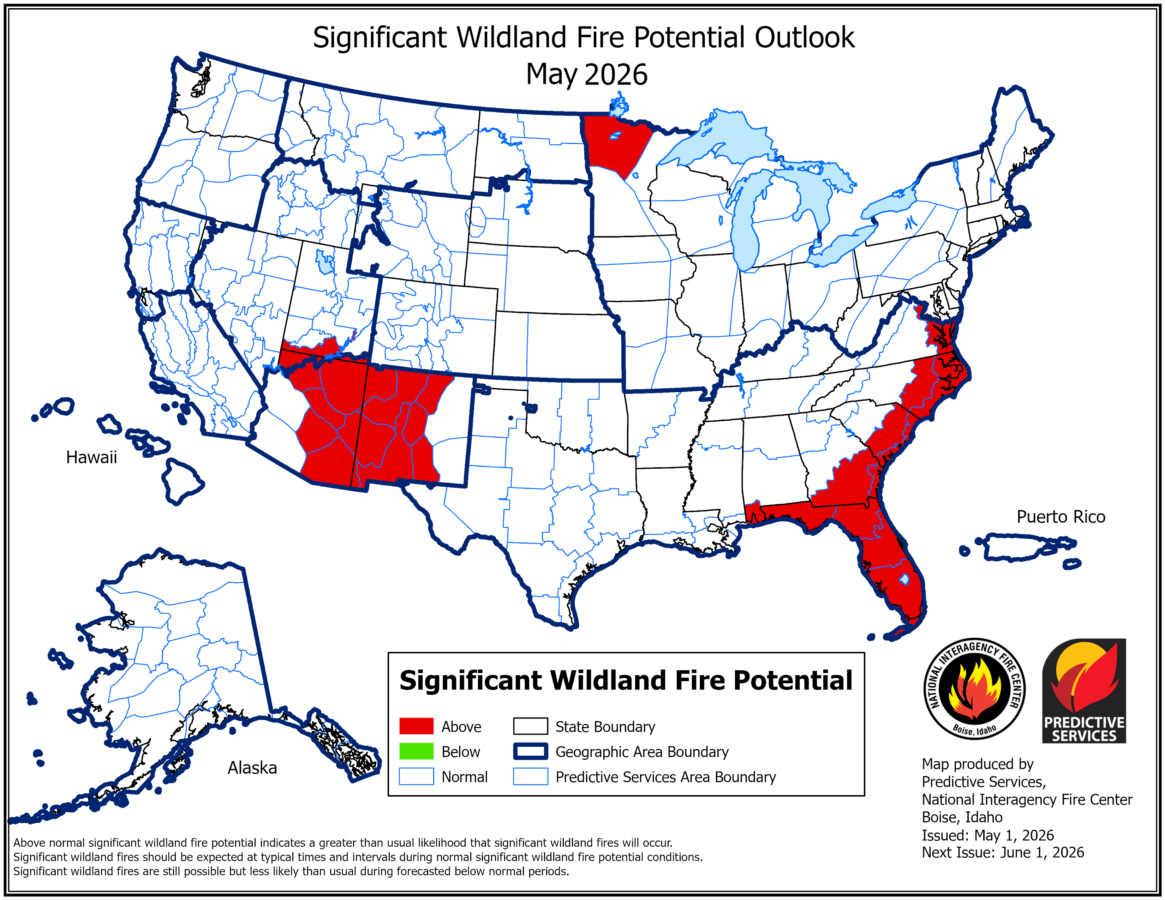
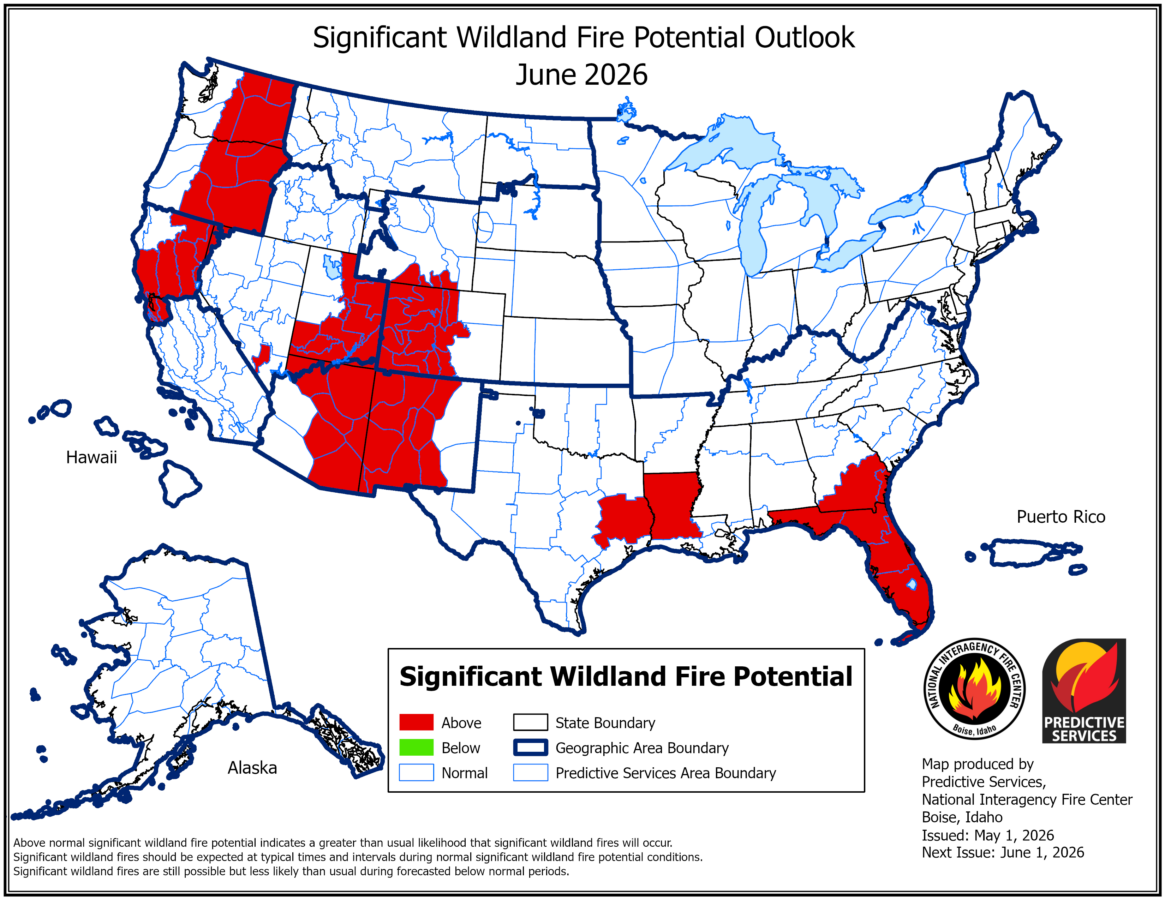
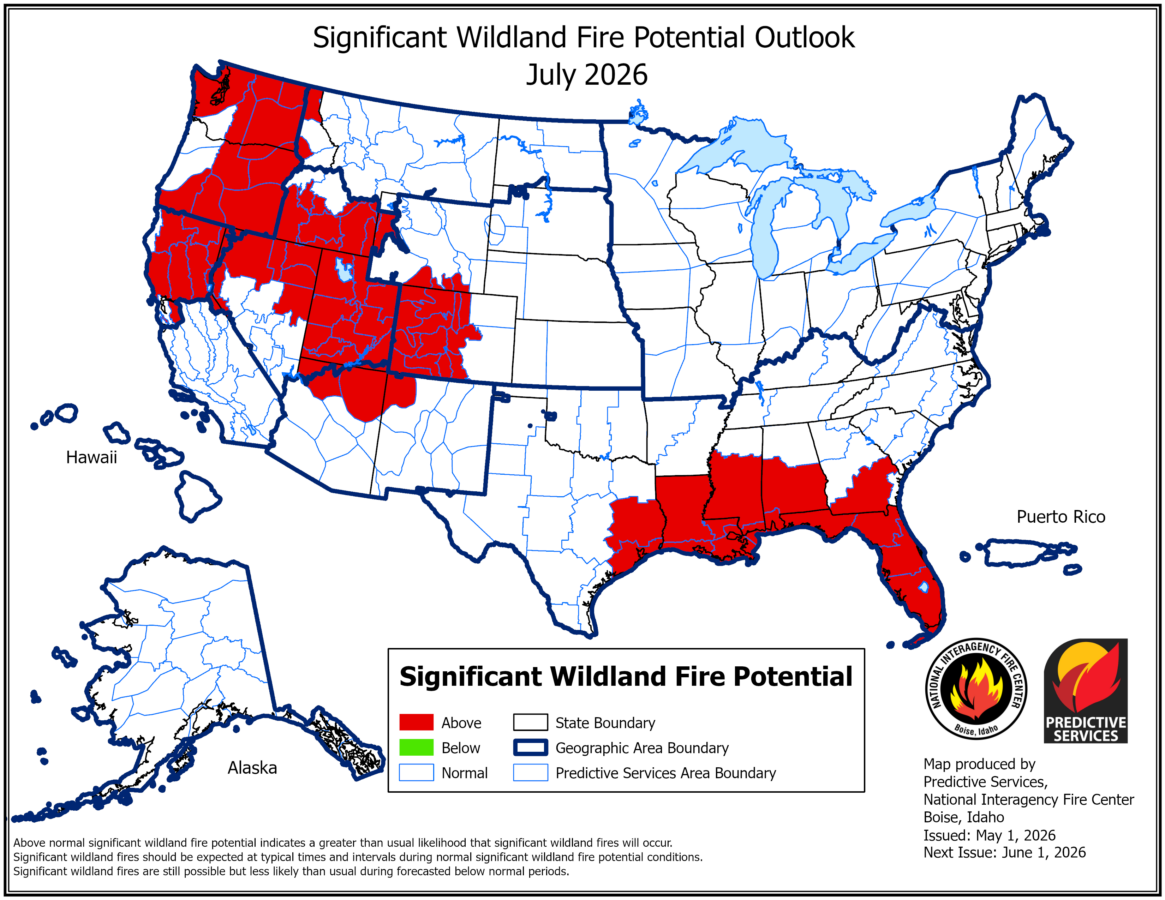
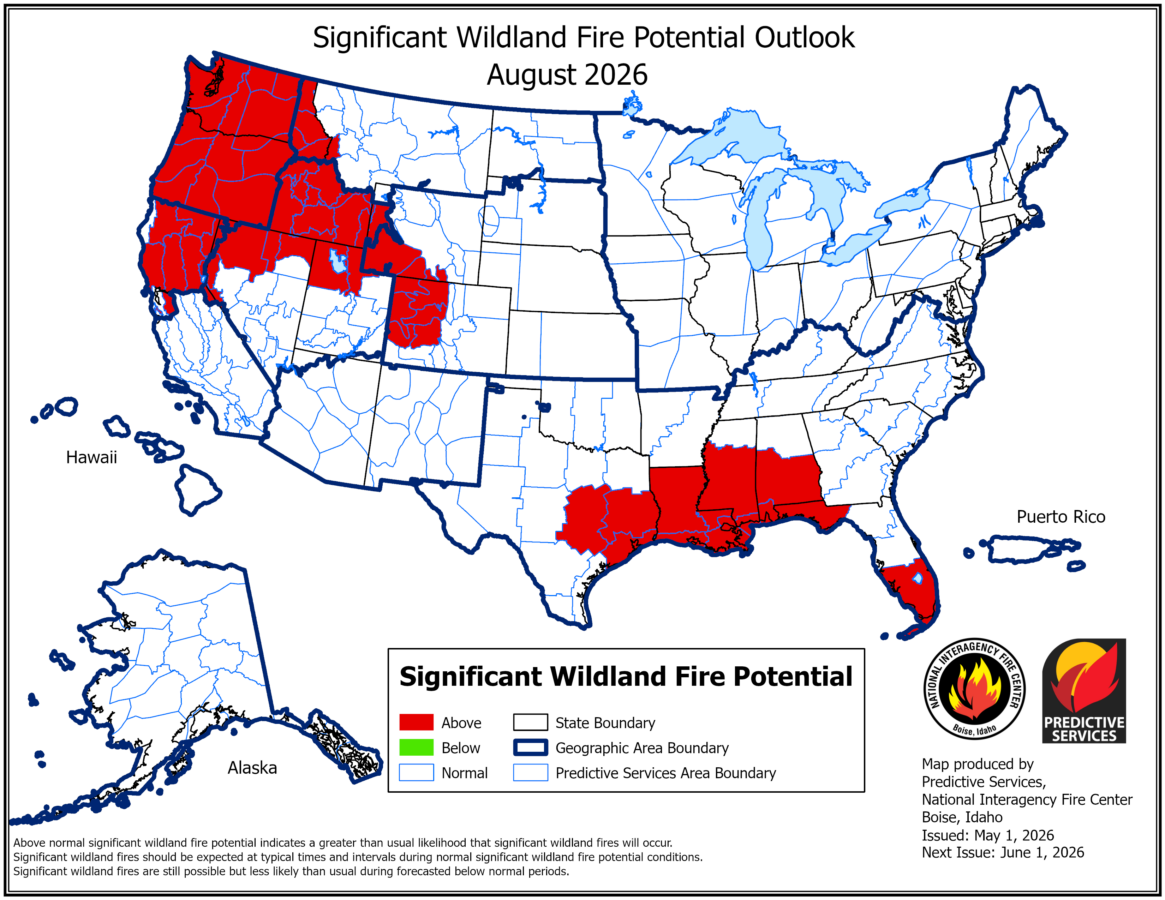
- Wildfires: Scientists have drawn a clear link between fossil-fueled climate change and the increased risk of wildfires over time. This year, that risk will be heightened across large parts of the country. low snowpack, early-season heat, and just enough precipitation to drive a pulse of early vegetation growth are combining to create heightened wildfire risk across the West. The overly dry Southeast is forecast to endure a difficult fire season as well. Wildfire smoke—which can travel thousands of miles, blanket large areas of the continent, and create dangerous air quality conditions for millions far from the fires—is an accompanying threat this Danger Season.
- Flooding: NOAA’s seasonal outlook for precipitation this Danger Season is currently mixed and will be important to track. Given drought conditions, rainfall could come as a great relief to much of the country. We know, however, that rain is now falling more often in the form of extreme precipitation: warmer air holds more moisture, driving more intense rainfall events and raising the risk of flash flooding, as was seen last year in the tragic Texas floods. Compound flooding from simultaneous hazards—also seen in the Texas floods, where existing drought counterintuitively exacerbated runoff—is a risk this season. And across the country, rising flood risk is colliding with the nation’s aging or inadequately built infrastructure, as was seen last year in Hawaii.
- Hurricanes: NOAA will release the official 2026 Atlantic hurricane season outlook later this month. An initial forecast from Colorado State University is calling for a below-average number of storms due to the developing El Niño. Warmer sea surface temperatures—which are at near record high levels—may counter El Niño’s typical damping effect on storm formation. But whatever the forecast, it only takes one landfalling hurricane to cause significant destruction.
- El Niño: Enter El Niño, as if the cast of characters weren’t crowded already. Forecasts of El Niño have shifted the timing of its development earlier in the year several times. It is currently forecast by the World Meteorological Organization to develop between May and July and is now widely seen as having the potential to develop into a “super” El Niño later this year.
The natural global climate cycle, of which El Niño is the hotter end, is driven by complex ocean-atmosphere interactions in the equatorial Pacific. This cycle influences regional climate patterns around the world in different ways, depending on its phase. Those “patterns” include vital things like water for crops, and thus food security, and thus people’s lives. It occurs regardless of man-made climate change, but it doesn’t occur independently of it, meaning that El Niño in a changed global climate affects us differently. And while scientists are doing their best to forecast the onset, strength and impacts of this El Niño, by warming the planet, we have made this a lot harder. Some of those hot Pacific Ocean temperatures, e.g., are in unprecedented territory and, according to at least one model, forecast to rise as high as 4°C above historic average. Elsewhere, climate patterns like precipitation in the southern half of the United States, which usually sees more rainfall during an El Niño, are proving hard to forecast. What exactly should we expect in North America with this El Niño? No one really knows.
I discuss El Niño here because, as we try to foresee and prepare for the risks ahead, it is a significant wild card, it may dominate the news and public discourse around climate extremes, and it could be a major driver of change in the US and around the world.
No matter where you live, this summer may test you in ways that would have seemed extreme just a decade ago but are becoming the new baseline of our lives.
The climate extremes of Danger Season 2026 will be compounded by something that has no equivalent in our nation’s history: a US administration that is not simply failing to protect people but is actively removing protections, exacerbating risks, and inflicting harm, all with a hardening quality of authoritarianism.
The Trump administration has launched a systematic assault—largely foreshadowed in Project 2025—on the federal agencies that inform people about climate change, protect and help them recover from climate extremes, and enable the transition away from fossil fuels. Abdication of leadership is a passive abandonment. Dereliction of duty is negligent failure. This is malfeasance. Conscious, intentional wrongdoing, heedless of laws or ethics, indifferent to harm done—or intending it—and aimed to amassing profits and power to a few.
Climate change? Nothing to see here. With deep climate science cuts across federal agencies and the attack on bedrock climate policies, the administration is attempting to make climate change disappear from federal policy—even as the harms mount in people’s lives.
Budget and staff cuts to NOAA—including the National Hurricane Center and National Weather Service—have put the forecasting, early warning, and science capacity that communities depend on to stay safe in jeopardy. The continual attacks on NOAA have left staff feeling “burnt out,” caused severe disruptions to valuable datasets, and will be renewed in the upcoming budget fights.
And the destruction goes deeper, including the disbanding of the National Climate Assessment and the targeting the National Center for Atmospheric Research for dismantling, as the administration seeks to systematically erase the federal government’s ability to track, understand, and communicate our climate risk.
Help may not come when it’s most needed: With deep staffing and budget cuts to FEMA, and cuts, delays and politicization of disaster response, the administration is leaving communities to fend for themselves. It has installed unqualified leadership, downsized FEMA staff, cancelled grant programs, created massive recovery backlogs, and has pushed disaster response and recovery burdens onto state governments that lack the capacity to respond to major events, both logistically and financially. With three acting administrators within 15 months and newly confirmed Department of Homeland Security Secretary Mullin (after Kristi Noem was fired), FEMA is scrambling to hire back staff as we head into hurricane season.
Community resilience programs, which help communities prepare for and cope with climate extremes, have also been targeted and cut across agencies. Hazard mitigation grants, flood mapping, green infrastructure, heat emergency preparedness, cooling center support, low-income energy assistance—are being undermined when they have never been needed more.
Profit over people: The administration has gone to extraordinary lengths to pave the way for continued fossil fuel emissions and industry profits, gutting critical regulations and landmark public health protections. Despite the momentum of the clean energy transition, the Trump administration has sought to dismantle US clean energy policy at every turn, stymying wind and solar deployment, driving up energy costs, and handing federal energy policy to the fossil fuel industry’s surrogates; and to roll back clean air protections, actions that will make the smoke, smog, and pollution that accompany Danger Season extremes even more dangerous, especially for vulnerable populations.
In summary, our current federal government—the administration and Congress—does not care about us.
As a nation, we’re entering Danger Season distressed, fractured, and overwhelmed. Historically, climate disasters tend to bring people together, and undoubtedly they will. But there are headwinds to be named and countered.
The affordability crisis is one such headwind that’s front of mind for many millions. And the people who will experience Danger Season most acutely are those who can least afford to cope. The war with Iran, data centers, tariffs, and federal energy policy are driving up electricity, gas, food, and other household costs. Energy costs are rising even as clean energy alternatives that could lower them, longer term, are being blocked. As rising electricity rates meet a season of dangerous heat, many households will strain to pay to run the air conditioning that is essential to stay safe in a heat wave.
The country is already roiling with anger, frustration and fear, in response to the affordability crisis and the Trump administration’s rising authoritarianism and alarming choices, like waging war on Iran. The state of the nation is fraught and dangerous climate extremes are now entering the fray.
The dysfunction and distress at play in the US right now make us less safe, broadly, and staying safe is more challenging this year as more people struggle with everyday life. But everyone should try to consider their risks and have a plan to stay safe.
This is also a time to hold our leaders accountable for the unnecessary hardship caused, first by the Trump administration, but second by Congress’s failure to do its job. The August recess will be a key window for members of Congress, back in their home states and districts, to hear directly from the people bearing the costs of their subservience to the dangerous Trump agenda.
And let us not forget accountability for the fossil fuel industry, chief sponsor of the climate crisis and this year’s Danger Season. We’re in this danger in large part because of insatiable corporate greed and the lengths to which this doomed industry will go—deception, denial, and delay, even today—to postpone the inevitable end of the fossil era and eke out a few more years of profit.
Throughout this Triple Danger Season, UCS will be tracking climate extremes, calling out the malfeasance that is leaving communities to fend for themselves, and making the connection to critical issues like affordability and fossil fuel accountability. Stay with us, sign up to take action, follow us on social media, tag us with what you’re seeing. And when the heat rises and fires burn and floods come—as they will—remember that this isn’t leadership, but to get the leadership we deserve, we have to demand it.
“}]]